A Practical Buying Guide for Clinics
At HQLASER, we speak with salon owners, medical spa managers, and aesthetic equipment distributors who want to understand a diode laser system before ordering it.
They ask about wavelengths, cooling, operator records, support, and the fit between the machine and their treatment menu, staff, target-market documents, and workload.
Price matters.
The machine still needs to match the clinic’s service plan, because the purchase price does not show maintenance, training, downtime, or configuration risks.
Diode Laser Hair Removal and IPL Are Different
A diode laser delivers selected wavelengths, while IPL uses filtered broad-spectrum light. This difference affects energy delivery, parameters, treatment planning, and the clinic’s service menu.
The distinction is clear.
A hair-removal-focused clinic may prefer a dedicated diode workflow, while a clinic planning several light-based services may consider IPL. Do not judge either system by one number.
Wavelength, pulse width, energy density, spot size, cooling, handpiece design, and training all matter.
Choose the workflow your team can repeat.
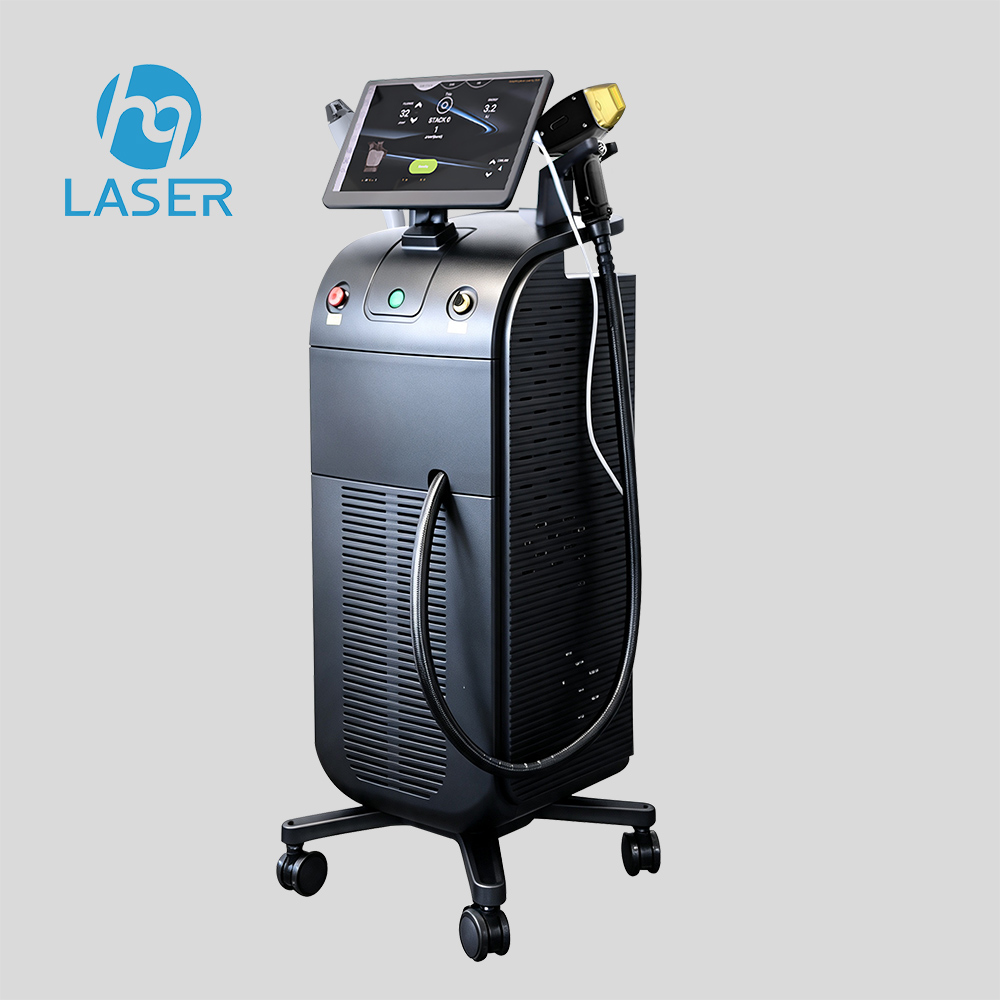
What We List for the HQLASER HQ-MAX
The HQLASER HQ-MAX product information lists four wavelength options: 755 nm, 808 nm, 940 nm, and 1064 nm. These options give trained operators more choices when planning treatments for different client profiles and body areas.
Keep the model clear.
The product page lists a 3000 W machine configuration, a 600–2400 W handle power range, an energy-density range of 1–120 J/cm², a pulse-width range of 5–200 ms, and a frequency range of 1–10 Hz.
These figures describe the listed configuration, not a guarantee of the same response for every client. Buyers should confirm the final voltage, handpiece, software version, and specification sheet before signing an order.
Specific details reduce mistakes.
Match Wavelengths to the Client Profile
Hair thickness, hair color, skin tone, treatment area, recent sun exposure, and previous treatment history can influence consultation. The operator should review these points before selecting settings within the clinic’s approved protocol.
More options help.
They do not replace screening, informed consent, patch testing where required, or a written record of the treatment area and selected settings.
We recommend a live demonstration with the actual HQ-MAX model and handpiece configuration planned for purchase, rather than relying on a catalogue image or a short specification list.
The record matters.
Cooling Supports the Daily Workflow
A diode laser used for repeated appointments needs a cooling design that manages heat at the treatment interface and inside the machine, while the operator follows approved parameters and the manufacturer’s instructions.
Cooling supports comfort.
The HQ-MAX is described with combined water, air, semiconductor, and TEC cooling. The product information lists a 2400 W TEC condenser and continuous-operation capability for the stated configuration.
Before purchase, ask about handpiece cooling, water-circulation maintenance, temperature or flow alarms, recommended operating schedules, and electrical requirements for the destination market.
Good cooling still needs correct operation.
Handpiece Design Changes the Operator’s Day
A handpiece is used throughout the appointment, so balance, cable movement, display visibility, tip replacement, cleaning, and spare-part availability deserve attention alongside the main cabinet.
Small details count.
The HQ-MAX information lists spot sizes of 13 × 16 mm, 13 × 22 mm, and 13 × 30 mm. It also describes a magnetic connection for the upgraded handle.
A smaller spot may suit a controlled area, while a larger spot may suit an appropriate body zone. The actual choice remains subject to the clinic’s protocol, client assessment, and operator competence.
Ask to hold the handpiece.
Smart Assistance Still Needs Human Review
The HQ-MAX product page lists skin-tone selections from I–VI, a tanned-skin option, and an AI skin analyzer intended to assist with treatment-parameter generation.
The software is a support tool.
The operator still needs to review medical and treatment history, current skin condition, recent sun exposure, hair characteristics, contraindications, and the clinic’s treatment policy before proceeding.
Before daily use, confirm how the supplier handles software updates, user permissions, treatment records, and data management.
Technology needs a protocol.
Safety and Documentation Belong Together
Before offering treatment, the clinic should prepare consultation forms, informed-consent documents, staff competency records, cleaning procedures, maintenance checks, incident escalation steps, and aftercare instructions that match the actual device and local requirements.
Write it down.
HQLASER states that product certificates can be provided upon request and lists CE, FDA, TÜV, RoHS, and ISO on the product page. Buyers should request documents for the exact model and check the rules of the destination country or region.
A certificate name alone is not enough. Marketing copy should not guarantee identical results or permanent hair removal after a fixed number of sessions, because treatment response can vary with hair cycles, hair characteristics, skin type, treatment area, settings, and attendance.
Clear wording protects trust.
After-Sales Support Is a Buying Condition
Training, troubleshooting, spare parts, warranty terms, and response time belong in the equipment decision, because weak post-delivery support can interrupt schedules and increase operating costs.
Support comes later.
HQLASER lists a two-year warranty, a 30-day return and refund policy for quality issues, and one-on-one clinical operating training after delivery. Buyers should confirm the final terms, exclusions, shipping responsibilities, and exact configuration in the quotation and sales agreement.
High-volume clinics should also ask about replacement handpieces, maintenance schedules, and temperature or water-flow warnings.
The agreement should be specific.
A Simple Investment Check
A multi-wavelength diode laser may suit a clinic seeking a dedicated hair-removal service, but the decision should come from actual demand, not a long specification list or one advertised power figure.
Use the numbers.
Check seven points: monthly appointments, client profiles, operator training, treatment records, equipment utilization, ownership cost, and destination-market documents.
The right machine is one the team can operate safely, record consistently, maintain efficiently, and explain honestly.
Fit comes first.
Our Recommendation Before You Order
Request the exact HQ-MAX specification, a demonstration with the planned handpiece, voltage and cooling requirements, warranty terms, training details, and destination-market documents.
Start with the exact model.
For full specifications, visit the HQLASER HQ-MAX 808 Diode Laser Android product page.